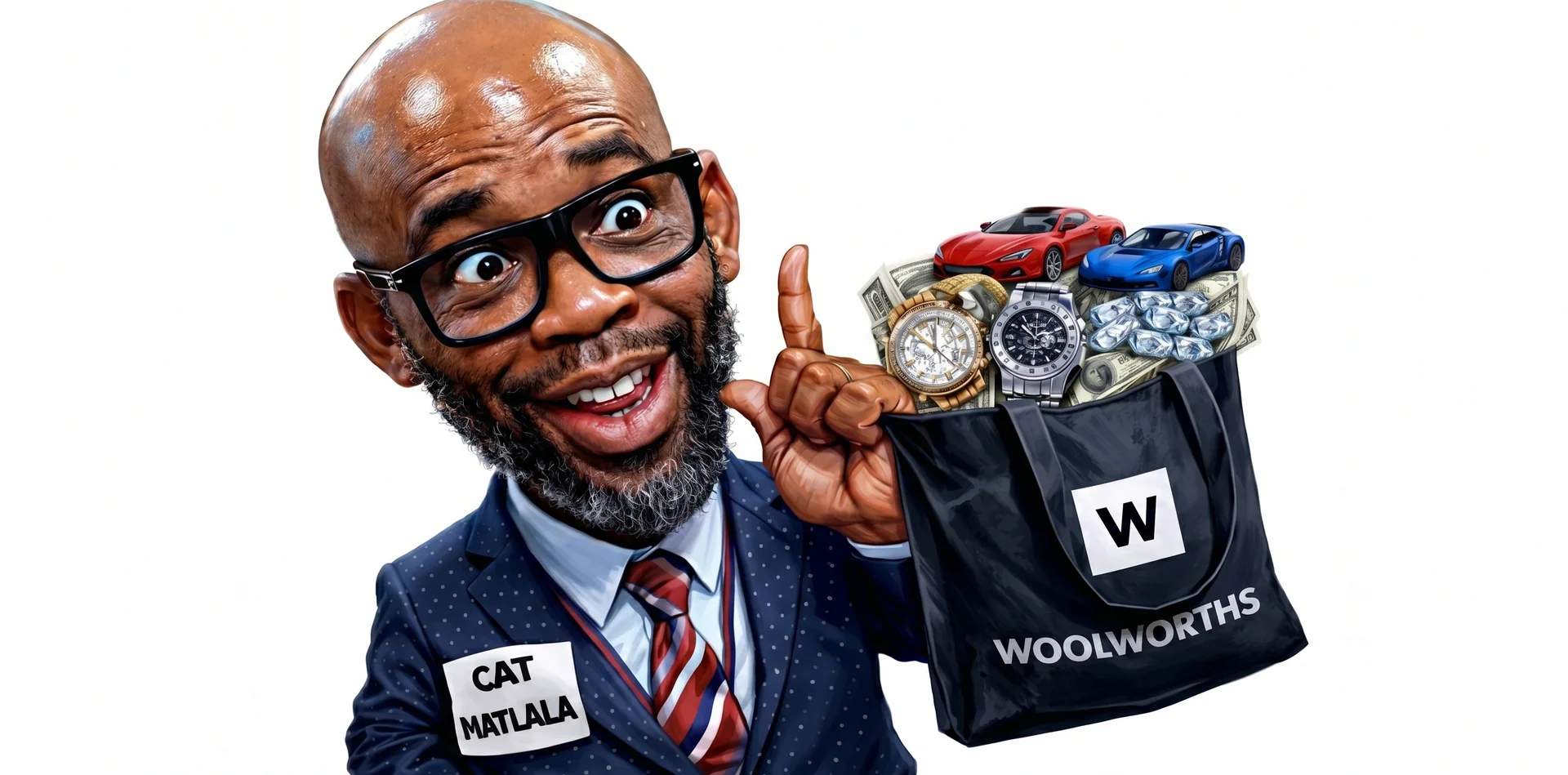
The R5 Dream
When I feel down, insecure, or unsure of my future, I play the Powerball. While I know I will never win, I choose to believe I already have. Until the next draw when I inevitably lose, the price of a ticket is a small fee to believe that a better life is possible.
Lately, however, that fantasy has started to feel empty. Running it in my head over and over again leads to the same dead end. Let’s assume I win. What do I do now that I have it all? Will I be happy? Would I want more? Yes. Of course I do.
Am I The Problem?
When did my definition of success become tied to “things”? Wherever the wealth came from - a lottery ticket, entrepreneurship, or a corporate job - the plan was always the same. To have more. Grinding as of a salaried professional to save and invest was just a slower version of winning the Powerball. I wanted the big house, the cars, the clothes, a fancy phone with all the cool features. Winning wouldn’t make me materialistic; I already was.
Then again, how could I criticize myself for feeling this way? How could I criticize anyone? How could I not be materialistic when, relatively speaking, I had so little compared to those with the lives I desired? What I really wanted was security. The freedom to choose what I wanted from my life. Even then I am not sure it would ever be enough.
The implication of this feeling made me uncomfortable. With my Powerball millions would I become the philanthropist I imagine I should be? With my newfound freedom do I work towards ensuring others can achieve that same freedom, in whatever form that takes? If it were anyone else, I would certainly expect them to. But what obligation would they - would I – have?
I can choose to help. I can choose not to. By slowly insulating my life from the everyday struggles of ordinary South Africans their “reality” becomes something I only see on the news. After that it would be easy. And besides, I cannot solve everyone else’s problems.
The escape would look like a house in a secure complex in a high-end suburb, a R200 000 solar system to forget the troubles of loadshedding. Paying for private security to ignore the fact that the nearest police station has only one working vehicle. It is the freedom to look past the collapse of public hospitals and receive the best medical treatment privately because I have medical aid.
Why then would I involve myself in the struggles of a majority I now have very little in common with? What about what I want?
Many of us would agree that this attitude keeps us backward. However, with few alternative models of success how can it be surprising that we find ourselves perpetuating the same system that keeps us down? What is our alternative?
The Real Lottery
Where National Treasury reports youth unemployment at a staggering 58.5% and with tertiary education remaining a privilege for just 12.7% of the population, having an education and a stable job is its own kind of lottery.
The uncomfortable truth is that the same dilemma I would face as a Powerball multi-millionaire is the same dilemma many of us face right now. It is a dilemma I often face today. Unable to see our own privilege we use our degrees and our jobs as a “Get Out of Jail Free” card, to escape a reality too common for most of us.
It is the NSFAS-funded graduate who stops talking about social justice because it might make their boss uncomfortable. Or a successful entrepreneur complaining about a “culture of entitlement” forgetting the support they received to make their dreams come true, or their underhanded methods. It becomes moving to the suburbs to distance ourselves from the unglamourous and difficult backgrounds we leave behind. Once we “make it” we find ourselves supporting a system than held us down only yesterday, a system that continues to oppress those who are unlucky enough to find themselves on the outside. Now that we are on the inside will we be different?
Would I fight for change as a Powerball-winning multimillionaire when I don’t do that now? And what if I never become successful - no Powerball, university education or corporate job – would my friends lucky enough to succeed leave me to fight my own struggles? After all was it not their hard work that made them successful?
With no opportunities or support my failure would not be surprising, it was by design. Somehow I find comfort in that. To know that no matter how hard I work there will still be no jobs, and no opportunities. It was never something I deserved.
An Obligation to Change
My tertiary education was funded almost entirely by the people of South Africa - through government bursaries and free of any obligations. If fewer motivated and driven South Africans believed I deserved to be educated, for being nothing more than a South African, I would not have a degree. And I most certainly would not be writing this article. Many would argue that because I could not afford an education, I should not have received one. I did not deserve one. I disagree. These systems do not exist from nothing, nor are they unchangeable. I am proof of that.
My obligation is to pay it forward. To be the kind of person who can make a difference in the lives of others. Just as others have done for me. Yet I am a product of a system that often rewards the opposite: one that influences me me to pursue my own individual success, to view a better South Africa as an option I have no obligation to work towards while I leave others behind. Nobody ever blames themselves for the way things are, and nothing ever changes.
As privileged South Africans—in whatever shape or form —we must ask ourselves: are we satisfied with the path we are on? We tell ourselves that only with more power or privilege could we make a real difference. It does not take winning the Powerball to do that.